
Subscribe to Our Newsletter
Join our community and stay updated.

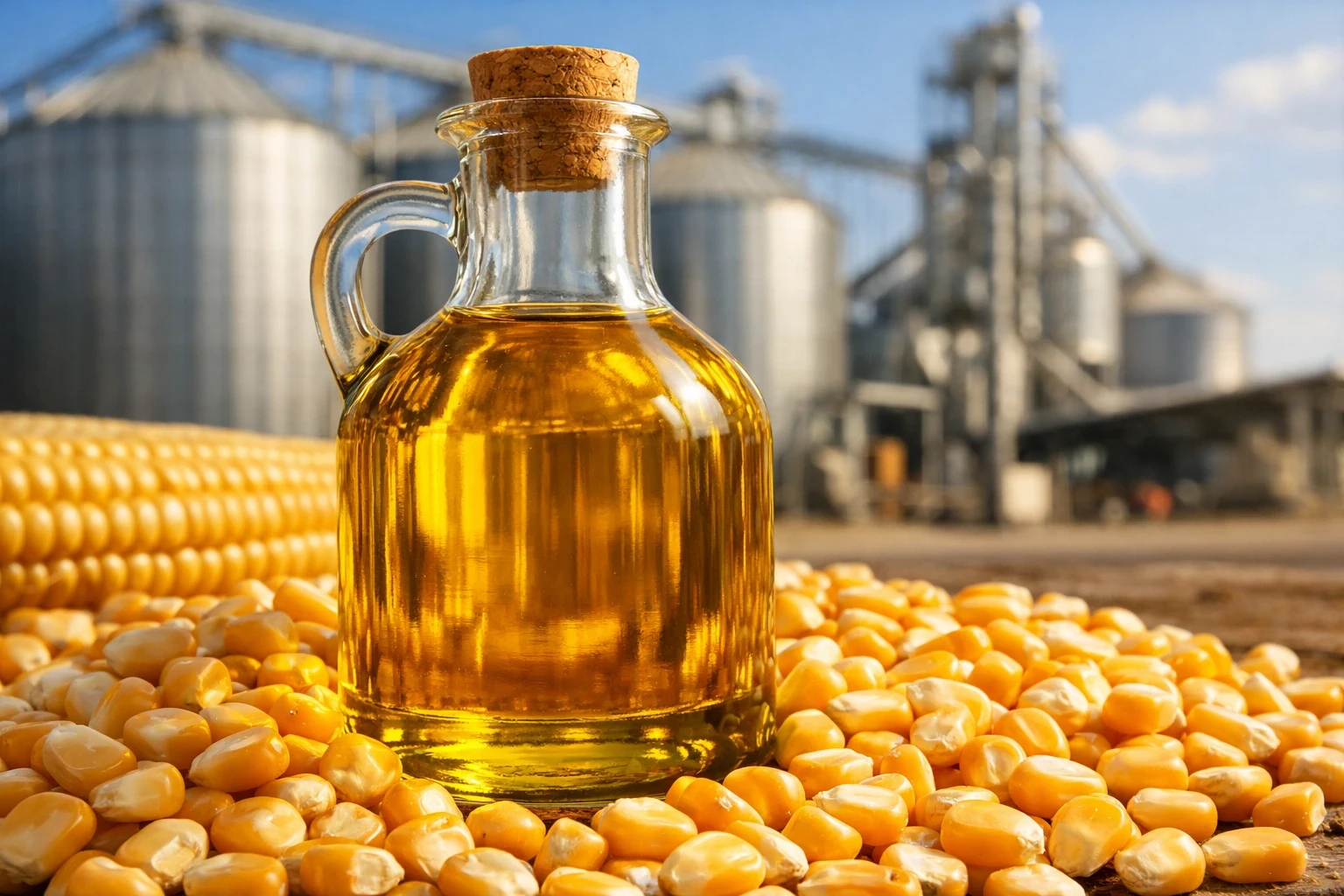
From the crispy texture of your favorite snack to the smooth feel of your skin cream, there's a high chance a versatile, plant-based ingredient is at work,i.e., maize oil. Often overlooked, this derivative of the humble corn kernel is a powerhouse in global manufacturing.
As industries increasingly look for reliable, plant-based raw materials, maize oil continues to play an important role in both consumer products and large-scale manufacturing. This article explains what maize oil is, how it is produced, its key properties, and where it is commonly used.
Maize oil is a vegetable oil extracted from the germ of maize (corn). The germ is the nutrient-rich part of the maize kernel, containing oils, proteins, and essential fatty acids.
After extraction and refining, maize oil appears as a light-colored oil with a mild aroma and neutral taste. These qualities make it suitable for applications where the oil should not alter flavor, scent, or formulation stability.
The production of maize oil is a sophisticated process that begins with the separation of the nutrient-dense germ from the rest of the kernel. In industrial settings, this separation occurs through one of two primary milling processes, depending on the desired end-products.
Understanding the origin of the germ is crucial for industrial buyers, as it defines the oil's role in the circular economy:
Once the maize germ is separated, the oil is extracted and refined to meet food, pharmaceutical, or industrial performance standards.
These refining steps ensure consistent quality, long shelf life, and reliable performance across food, personal care, pharmaceutical, and industrial applications. Maize oil is available in different grades depending on its intended use, including food-grade and industrial-grade variants.
Maize oil is naturally rich in antioxidants, particularly alpha-tocopherol (Vitamin E). This provides high oxidative stability, meaning the oil is less prone to rancidity during storage or heating.
One of the most significant advantages of refined maize oil is its high smoke point, typically around 232°C (450°F).
Maize oil contains a high concentration of polyunsaturated fatty acids (PUFAs), primarily linoleic acid.
Because maize is a primary global crop, the oil is a cost-effective alternative to specialty oils like grape seed or avocado oil, while offering similar (or superior) stability.
Maize oil is commonly used in household cooking as well as commercial food processing. Its high smoke point makes it suitable for frying, baking, and sautéing. In food manufacturing, maize oil is used in:
Its neutral flavor allows food manufacturers to maintain product taste while benefiting from stable oil performance.
In the personal care industry, maize oil is valued for its light feel and compatibility with skin and hair formulations. It is often used as a base or carrier oil. Common applications include:
Maize oil helps improve spreadability and moisture retention without leaving a heavy residue.
Maize oil is also used in pharmaceutical formulations where plant-based oils are required. It serves as a base ingredient in:
Its stability and neutral nature make it suitable for formulations that require consistency and controlled absorption.
Beyond consumer products, maize oil plays a role in several industrial uses. It is used as a raw material in:
Beyond its functional properties, maize oil offers clear advantages for manufacturers, procurement teams, and product developers.
Maize oil’s compatibility across food, personal care, pharmaceutical, and industrial applications allows companies to standardize on a single, multi-purpose raw material. This reduces the complexity of managing multiple specialty oils, minimizes inventory SKUs, and simplifies supplier relationships.
As a globally produced commodity derived from a major agricultural crop, maize oil offers a more stable and predictable pricing structure compared to niche or regionally sourced vegetable oils. This helps in long-term budgeting and protects against volatile market fluctuations.
The oil’s stability under heat and during storage, combined with its compatibility with existing industrial equipment (from frying systems to chemical reactors), ensures smooth, large-scale production runs with minimal downtime or waste.
By choosing maize oil especially when sourced as a co-product from integrated biorefining, companies directly contribute to a circular economic model. This enhances Environmental, Social, and Governance (ESG) reporting, appeals to eco-conscious consumers and B2B partners, and aligns with regulatory trends favoring renewable inputs.
When sourced from a certified and transparent supplier, maize oil delivers reliable performance batch after batch. This consistency is critical for maintaining product quality, meeting stringent industry standards (whether food-grade, pharmaceutical, or industrial), and reducing quality assurance overhead.
With growing consumer and regulatory demand for plant-based, non-GMO (where applicable), and sustainably sourced ingredients, integrating maize oil into formulations positions brands competitively for market trends without sacrificing performance or cost-efficiency.
Selecting the right maize oil supplier is essential, especially for bulk and industrial buyers. Key factors to consider include:
A strategic supplier partnership ensures that the maize oil not only performs as expected but also supports your operational and corporate objectives.
Edhas Biofuel is engineered to be that strategic partner. We provide more than just a commodity; we deliver a certified, consistent, and circular raw material.
For businesses looking to consolidate supply, de-risk procurement, and secure their product lines with a sustainable ingredient, we provide a reliable foundation.
Understanding how maize oil is produced, where it is used, and what benefits it offers helps businesses make informed sourcing decisions. With growing demand for renewable and efficient materials, maize oil continues to remain a relevant and dependable choice.
Maize oil has evolved from a simple cooking oil to a strategic, multi-industry raw material. Its unique combination of functional properties: stability, neutrality, and versatility delivers tangible business advantages like simplified supply chains, operational efficiency, and alignment with sustainability mandates.
The key to realizing these benefits lies in strategic sourcing. By partnering with a supplier like Edhas Biofuel, who guarantees integrated circular sourcing, grade-specific quality, and reliable scale, businesses can secure their formulations and procurement strategy with confidence.
Yes, maize oil and corn oil are the same. Both are extracted from maize germ and used in food, cosmetics, and industrial applications.
It depends on the maize source. Non-GMO maize oil is available from certified suppliers for food, cosmetic, and pharmaceutical use.
Store in cool, dry, dark conditions using stainless steel or coated tanks to maintain quality and shelf life.
Used in food, personal care, pharmaceuticals, and bio-based products due to its stability, neutral flavor, and high smoke point.
Provides heat stability, long shelf life, and a versatile, cost-effective ingredient for multiple industries.

Get the latest updates on renewable energy, sustainability trends, and our initiatives delivered straight to your inbox.