
Subscribe to Our Newsletter
Join our community and stay updated.

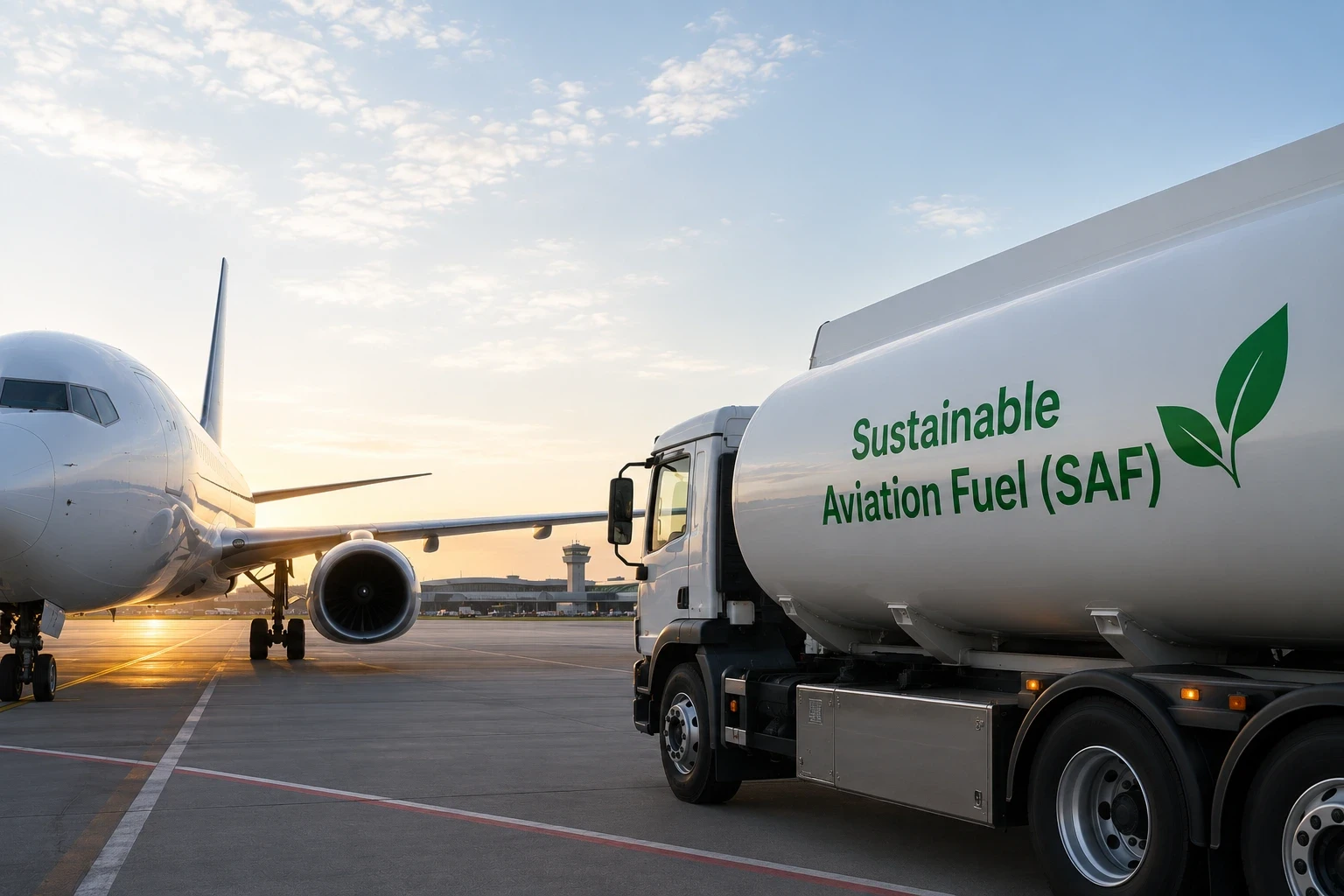
India's aviation sector is climbing fast. With annual consumption surpassing 9 billion litres of Aviation Turbine Fuel (ATF), the country has firmly established itself as the world's third-largest domestic aviation market. But this rapid ascent comes with a heavy carbon footprint and the government's countermeasure is Sustainable Aviation Fuel (SAF).
If ethanol blending defined India's biofuel narrative over the last decade, SAF is poised to be its compelling sequel. For ethanol producers already embedded in the ethanol ecosystem, the timing couldn't be better.
SAF is jet fuel produced from renewable or waste-derived sources rather than crude oil. It can be manufactured from used cooking oil, agricultural residues, industrial biomass, or even surplus ethanol.
This isn't an aspirational green goal; it's an official regulatory roadmap. India’s National Biofuels Coordination Committee has approved a phased blending mandate for international flights departing the country:
Year |
Blending Target |
|---|---|
| 2027 | 1% SAF blending |
| 2028 | 2% SAF blending |
| 2030 | 5% SAF blending |
To hit the 5% target by 2030, India will require nearly 700 million litres of SAF annually. Given that India achieved its E20 petrol-blending targets five years ahead of schedule, this mandate represents a guaranteed, rapidly accelerating market built from scratch.
Furthermore, as an International Civil Aviation Organization (ICAO) member, India must comply with CORSIA (Carbon Offsetting and Reduction Scheme for International Aviation). Starting in 2027, offsetting emissions will transition from voluntary to mandatory, making SAF adoption a regulatory necessity rather than a choice.
SAF can be produced through several different technology routes, each with distinct advantages and feedstock requirements.
Technology Pathway |
Primary Feedstocks |
Commercial Maturity |
Fit for India |
|---|---|---|---|
| Alcohol-to-Jet (ATJ) | Sugarcane/grain ethanol, agricultural surplus | Emerging | Excellent. Directly leverages India's existing, massive ethanol infrastructure. |
| HEFA (Hydroprocessed Esters & Fatty Acids) | Used Cooking Oil (UCO), animal fats, non-edible oils | Highly Mature | Moderate. Current domestic supply chains for UCO are fragmented. |
| FT-SPK (Fischer-Tropsch) | Biomass (rice straw, bagasse, municipal waste) | Early Stage / Capital Intensive | Long-term Potential. Viable solution for northern India's stubble-burning crisis. |
As of late 2025, India’s ethanol production capacity reached roughly 19.5 billion litres per year, comfortably outstripping immediate E20 blending needs. This surplus has left some distilleries facing softer off-take and pricing pressures.
The ATJ pathway offers a massive, alternative demand channel. The same maize, grain, and sugarcane infrastructure built for road transport can now pivot to serve the aviation sector, shielding producers from domestic petrol-market saturation and unlocking a premium-priced outlet for their output.
Metric |
Value |
|---|---|
| India's ethanol production capacity | ~19.5 billion litres/year (2025) |
| SAF required by 2030 (5% mandate) | ~700 million litres/year |
| Addressable market for ethanol producers | Direct (via ATJ route) |
The public sector is setting the initial pace under government directives to commission at least one HEFA-route SAF unit by 2028:
While the outlook is incredibly bullish, early movers must navigate a few turbulence zones:
SAF isn't a replacement for the ethanol blending story, it's an extension of it. The same distilleries, the same maize and sugarcane supply chains, and the same feedstock economics that built India's E20 success are now positioned to feed a second, higher-value fuel market.
For an ethanol industry currently sitting on underutilized capacity, that's not a small thing. It's a new growth channel, arriving right as the domestic road-fuel market shows signs of saturation.
The next five years will decide who captures that opportunity. Producers who move early on ATJ capacity, certification, and feedstock security are the ones likely to define India's SAF supply chain before it fully takes shape.
Sustainable Aviation Fuel (SAF) is a renewable alternative to jet fuel made from feedstocks like ethanol, used cooking oil, and agricultural waste. It can reduce lifecycle carbon emissions by up to 80%.
SAF supports India's aviation decarbonization goals and the government's blending mandate, creating a new growth market for the country's biofuel industry.
Ethanol producers can use the Alcohol-to-Jet (ATJ) pathway to produce SAF, creating a premium demand channel beyond petrol blending.
India plans to achieve 1% SAF blending by 2027, 2% by 2028, and 5% by 2030 for international flights.
High production costs, feedstock availability, policy support, and scaling domestic production are the key challenges for widespread SAF adoption.

Get the latest updates on renewable energy, sustainability trends, and our initiatives delivered straight to your inbox.