
Subscribe to Our Newsletter
Join our community and stay updated.

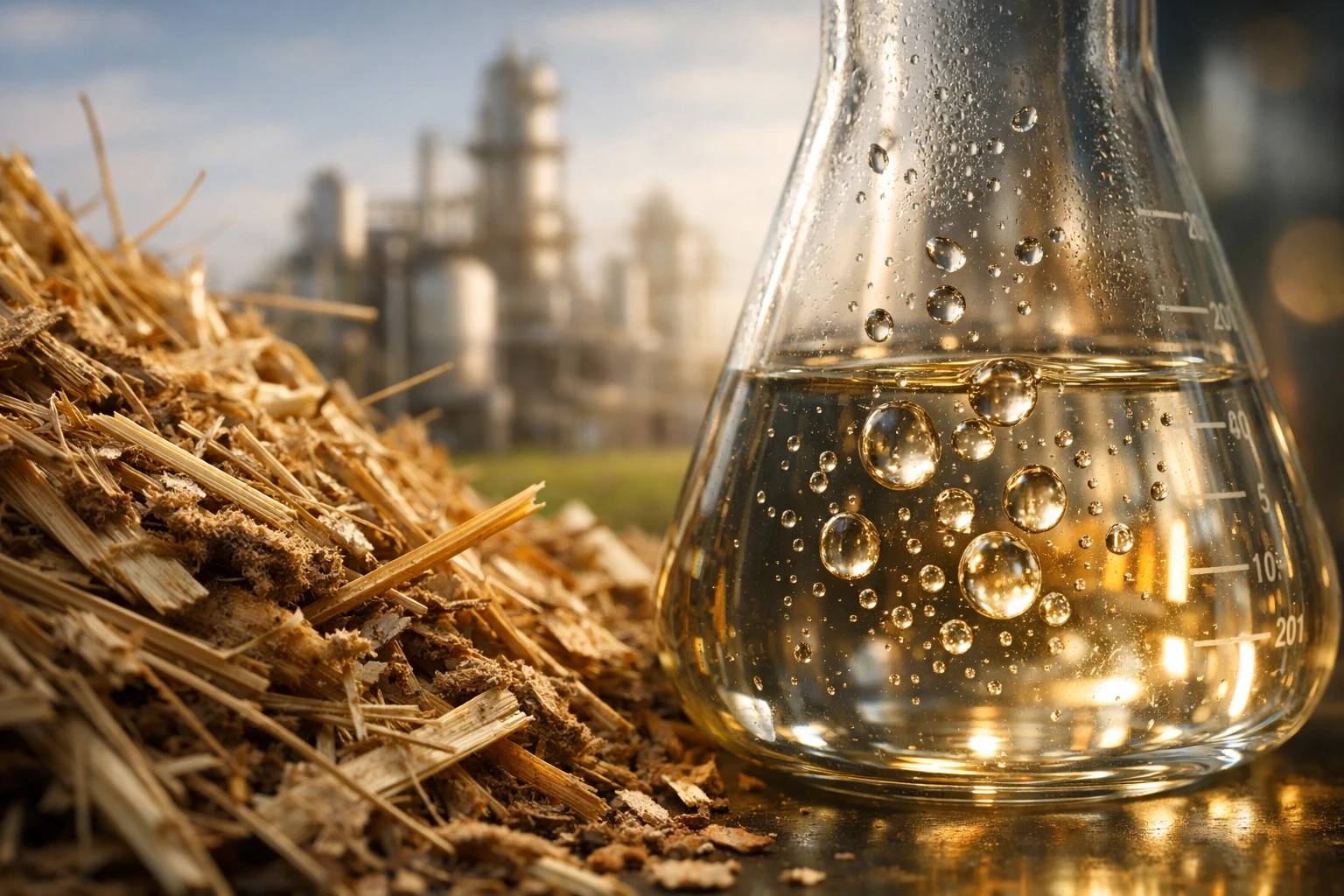
India recently hit a major milestone: 20% ethanol blending in petrol, achieved ahead of schedule. It’s a significant win for energy policy, farmers, and emissions reduction, reinforcing the broader impact of bioethanol as a cleaner fuel.
But this milestone also raises a tougher question: What comes next for ethanol blending in India?
The answer is increasingly clear: 2G ethanol in India, also known as second-generation ethanol.
|| 2G ethanol (second-generation ethanol) is a biofuel produced from agricultural waste like rice straw, wheat stubble, and bagasse, instead of food crops.
As India looks to scale its biofuel strategy without compromising food security, 2G ethanol is emerging as the next growth engine.
Most of the ethanol blended in fuel today is first-generation (1G) ethanol, derived primarily from food-based feedstocks such as sugarcane and grains, each with distinct characteristics as seen in the comparison of grain ethanol vs sugarcane ethanol.
The core difference lies in feedstock: food vs waste.
While 1G ethanol has powered India’s ethanol blending success so far, it comes with structural limitations:
India already manages a delicate balance between food security and energy demand. This means 1G ethanol cannot scale indefinitely.
2G ethanol is produced using lignocellulosic biomass, essentially agricultural waste left after harvesting.
Common feedstocks include:
These residues are often burned due to lack of alternatives. 2G ethanol converts this low-value, polluting waste into clean fuel
Unlike conventional ethanol, producing fuel from crop residue requires more advanced processing techniques, building upon the fundamentals of how ethanol is made.
The 2G ethanol production process:
The final product is chemically identical to 1G ethanol. It blends with petrol the same way, works in the same engines, and moves through the same supply chain.
The only difference is its origin, waste instead of food crops.
India generates 500–600 million tonnes of crop residue annually.
A large portion, especially in northern states is burned, causing:
2G ethanol plants change the economics:
India imports over 80% of its crude oil.
Every litre of ethanol produced domestically:
As 1G ethanol reaches its limits, 2G ethanol enables continued growth.
India has one of the largest biomass bases in the world, though much of it remains underutilized. This presents both opportunity and complexity, as highlighted in discussions advantages and disadvantages of biomass.
2G ethanol converts this into:
This is a rare case where economic, environmental, and agricultural goals align.
India’s push toward second-generation biofuels is backed by strong policy support.
Open to both public and private sector participation.
India has already begun building its 2G ethanol infrastructure.
Operational Plant
Upcoming Plants
More plants are in advanced stages of construction at:
National Target: 5–10 billion litres of 2G ethanol by 2030
Factor | 1G Ethanol | 2G Ethanol |
| Feedstock |
Sugarcane, maize, rice |
Crop residue, biomass |
| Food competition |
Yes | No |
| Carbon footprint |
Moderate |
Lower |
| Cost |
Lower |
Higher (currently) |
| Scalability |
Limited |
Very high |
While promising, 2G ethanol comes with real challenges:
These challenges don’t limit potential, but they define the pace of adoption.
2G ethanol is part of a broader shift toward a biomass-based energy ecosystem.
The same feedstock can support:
This creates a multi-product biofuel economy built on the same infrastructure.
The success of 2G ethanol depends on a strong and reliable supply chain.
Key stakeholders:
As capacity grows, efficient and traceable biomass supply chains become critical. At Edhas Biofuel, we operate within this ecosystem, supplying feedstocks like broken rice and biomass that support ethanol production across India.
The fundamentals are clear:
2G ethanol in India addresses all three simultaneously.
India is no longer experimenting with second-generation ethanol. It is building its future on it.
2G ethanol (second-generation ethanol) is a biofuel made from agricultural waste like rice straw, wheat stubble, and bagasse instead of food crops.
1G ethanol is produced from food crops like sugarcane and maize, while 2G ethanol is made from crop residue, making it more sustainable and scalable.
2G ethanol is used as a clean fuel blended with petrol to reduce emissions, lower crude oil imports, and support sustainable energy production from agricultural waste.
India is investing in 2G ethanol to reduce crude oil imports, manage stubble burning, and scale ethanol blending without impacting food supply.
2G ethanol is produced through pre-treatment, enzymatic hydrolysis, fermentation, and distillation of lignocellulosic biomass.
2G ethanol helps reduce air pollution, supports farmers with additional income, lowers carbon emissions, and improves India’s energy security.

Get the latest updates on renewable energy, sustainability trends, and our initiatives delivered straight to your inbox.