
Subscribe to Our Newsletter
Join our community and stay updated.

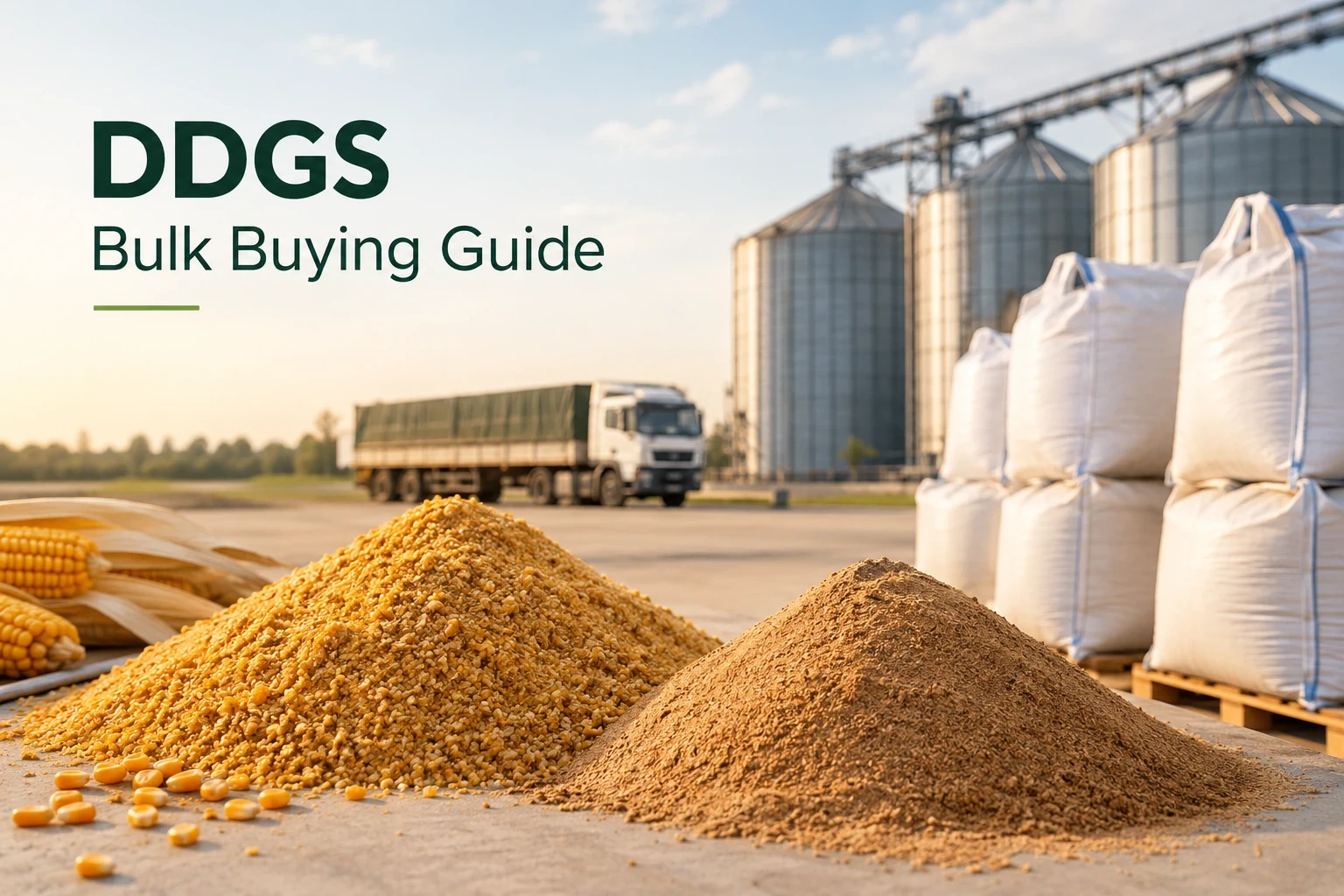
Buying DDGS in bulk involves more than negotiating a price per tonne. DDGS quality, HSN classification, GST, freight, packaging, storage and documentation all affect your final landed cost and feed performance.
Whether you are a feed manufacturer, trader or poultry and livestock integrator, this guide explains what to check before ordering DDGS in India.
Before comparing suppliers, confirm these four points:
Corn (maize) DDGS and rice DDGS are different products. Always compare quotations for the same grain source and specification.
Ask for protein, fat, fiber, moisture and mycotoxin specifications. Ideally, the supplier should provide a batch-specific Certificate of Analysis (COA) with every shipment.
A competitive price is less useful if quality varies significantly between loads. Ask how the supplier maintains consistency in processing and quality testing.
Confirm the supplier's monthly production capacity, minimum order quantity, dispatch schedule and expected lead time before planning your feed production around the supply.
Understanding DDGS's nutritional value is important when evaluating whether its price represents good value. See our guide on DDGS vs. traditional cattle feed to compare protein, digestibility and cost.
Both maize and rice DDGS are produced as co-products of grain-based ethanol production, but their nutritional profile, appearance and formulation characteristics can differ.
Edhas Biofuel supplies both maize and broken-rice DDGS.
Because protein, fiber, moisture and other nutritional parameters can vary, a rice DDGS quote should not be compared directly with a maize DDGS quote simply on a price-per-tonne basis.
Always ask suppliers to clearly mention the grain source and key nutritional specifications on their quotation.
DDGS is classified under HSN heading 2303, covering residues of starch manufacture and brewing or distilling dregs and waste. CBIC has specifically clarified that Dried Distillers' Grains with Soluble (DDGS) and similar residues fall under heading 2303 and attract GST at 5%.
This is important because DDGS is a feed ingredient, but its classification is based on its tariff heading rather than simply its end use. GST Council material also distinguishes DDGS under heading 2303 from specified animal feeds covered under other headings.
GST and tariff provisions can change, so buyers should verify the applicable rate and classification with their tax advisor before finalizing a purchase.
Landed cost is what you actually pay to have DDGS at your mill. The purchase price is only one part of your total cost.
For example (numbers are for demonstration only):
Cost Component |
Example per tonne |
|---|---|
| Ex-plant price | ₹15,000 |
| GST @ 5% | ₹750 |
| Freight | ₹1,200 |
| Landed Cost | ₹16,950 |
Two suppliers offering the same DDGS price can therefore have different landed costs depending on their location, freight arrangement, payment terms and order volume.
Tip: Ask for both the ex-plant price and delivered price so you can make an accurate comparison.
DDGS can be supplied in bulk or bags, depending on the buyer's handling and storage facilities.
Bulk supply can reduce packaging and handling costs and is suitable for larger feed mills with appropriate storage and unloading infrastructure.
Bagged DDGS is easier to handle, store and distribute, particularly for traders and smaller-volume buyers.
Edhas DDGS is supplied in 50 kg PP (polypropylene) bags.
Regardless of packaging, moisture protection is important. Bags should be intact, properly stitched and stored away from rain and humidity.
Freight can have a significant impact on your final DDGS cost, so logistics should be discussed before placing the order.
Key points to confirm include:
For regular feed production, planning repeat deliveries rather than waiting until inventory is nearly exhausted can help reduce supply disruptions.
Proper storage helps preserve DDGS quality.
Edhas Biofuel’s DDGS has a stated shelf life of 6 months, so purchase quantities should be aligned with your actual consumption and storage capacity.
Parameter |
Specification |
|---|---|
| Raw material | Broken rice / maize |
| Appearance | Rice: medium brown powder; Maize: yellowish granular |
| Moisture | Rice: max 10%; Maize: max 12% |
| Grade | Feed grade |
| Packaging | 50 kg PP bag |
| Shelf life | 6 months |
| Minimum order | 30,000 kg |
| Origin | Made in India |
Inspect each shipment before accepting it into inventory.
Check |
What to Verify |
|---|---|
| Documents | Invoice, HSN, batch number, COA and weighbridge slip match your order |
| Packaging | Bags are intact, dry, properly stitched and labeled |
| Appearance | Consistent with the stated maize or rice DDGS type, with no dark or burnt patches |
| Moisture | Within stated limits (check on COA and by testing) |
| Smell | Fresh, mildly sweet, grain-like, with no musty, sour or burnt odor |
| Texture | Free-flowing, with no caking or hard lumps |
| Contamination | No visible mold, insects or foreign material |
| Sampling | Samples collected from multiple bags or points for testing |
Visual inspection is useful for initial screening, but it cannot replace laboratory testing. For important parameters such as protein, moisture and mycotoxins, use appropriate laboratory analysis.
Avoid these common purchasing mistakes:
When comparing DDGS suppliers, evaluate quality specifications, COA availability, HSN and GST treatment, delivered price, payment terms, minimum order quantity and supply consistency together.
Edhas Biofuel supplies feed-grade maize and rice DDGS from its grain ethanol plant in Gujarat, with defined specifications, batch-level COA information and bulk supply for feed manufacturers and traders.
For DDGS specifications, COA details, pricing or bulk orders, contact the Edhas Biofuel team to discuss your requirements.
DDGS is classified under HSN heading 2303, which covers brewing or distilling dregs and waste.
DDGS currently attracts 5% GST when classified under the applicable HSN heading 2303. Buyers should verify the current GST rate and classification before placing an order, as tax rules can change.
Check the grain source, protein, moisture, fat, fiber, mycotoxin levels, batch-specific COA, HSN and GST treatment, packaging, freight, minimum order quantity and delivery schedule before purchasing DDGS in bulk.
Maize DDGS is produced from maize and is generally yellowish and granular, while rice DDGS is produced from broken rice and is generally medium brown and powder-like. Their nutritional specifications can differ, so prices should be compared only after considering the grain source and quality parameters.
Store DDGS in a dry, well-ventilated area, protected from rain, moisture and roof leaks. Keep bags off the floor, maintain batch traceability and follow FIFO (first in, first out) inventory rotation to help preserve quality.
Yes, made from maize and broken rice respectively, both feed grade.

Get the latest updates on renewable energy, sustainability trends, and our initiatives delivered straight to your inbox.