
Subscribe to Our Newsletter
Join our community and stay updated.

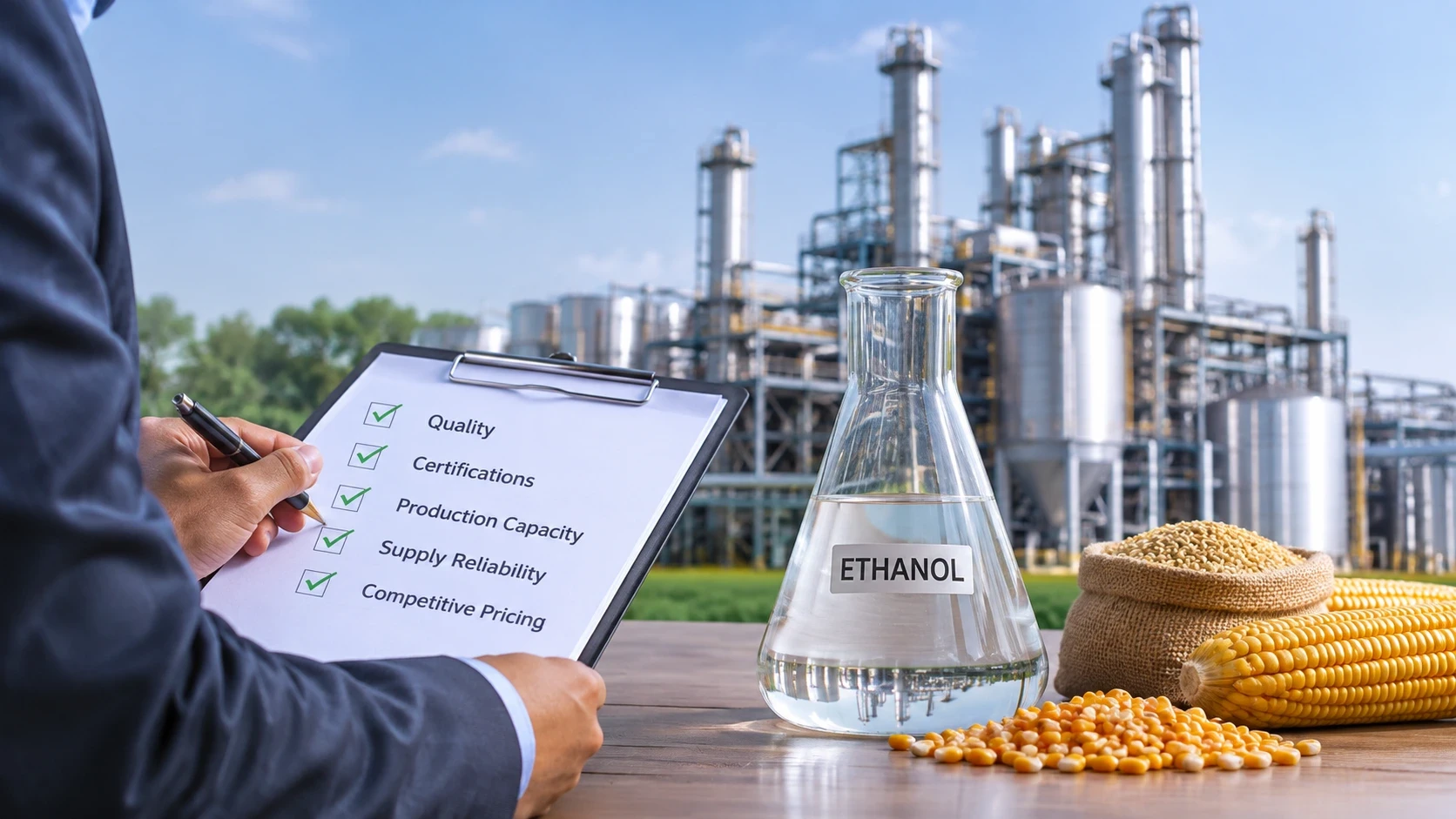
India's growing ethanol industry has opened new opportunities for the fuel, pharmaceutical, chemical and manufacturing sectors. As ethanol becomes an important industrial raw material and alternative fuel, demand for reliable suppliers keeps rising.
Choosing a manufacturer takes more than comparing prices. Purity, production process, quality standards, capacity and supply reliability all decide whether a supplier can meet your needs. Inconsistent supply or off-spec product can hurt production quality, efficiency and costs.
So, how do you choose the right ethanol manufacturer in India?
Here are 10 factors to evaluate before you choose an ethanol manufacturer.
First Ethanol comes in different grades, each built for particular applications. Before approaching any supplier, be clear about how you will use it.
Some commonly available ethanol categories include:
Decide your grade, purity, volume and technical specifications before requesting quotations. A manufacturer that understands your application is more likely to supply the right product.
The manufacturing process shapes ethanol quality and consistency. In India, ethanol is mainly produced from grain-based and molasses-based feedstocks.
Grain-based ethanol production uses maize, broken rice and other grains.
The process generally involves:
Molasses-based production uses a sugar industry by-product. Its fermentable sugars are fermented and distilled to produce ethanol.
Ask about feedstock sourcing, production technology and process controls. A well-managed process is what keeps specifications consistent.
Product quality should be one of your primary considerations when selecting an ethanol manufacturer in India. Even small variations in composition can affect how suitable ethanol is for an application. Start with the manufacturer's stated purity and technical specifications, and look at these parameters:
Ask for a Certificate of Analysis (COA) and find out how often testing is done and whether batch-wise documentation is available. For regular buyers, consistency across batches matters as much as purity in a single delivery.
A reliable ethanol manufacturer should be able to show that its operations and products meet the standards that apply to your use.
Ask about:
Remember that different ethanol grades and applications may have different regulatory requirements. A certification relevant to one application does not automatically establish suitability for another.
A supplier with good pricing and quality is of little use if it cannot deliver your volumes consistently. Supply interruptions can disrupt production schedules and raise procurement costs.
Consider:
Also ask how the manufacturer handles production planning, inventory and unexpected disruptions.
The lowest quotation rarely delivers the best value. Ethanol prices vary with grade, purity, feedstock, order volume and delivery location.
When comparing quotes from different manufacturers, check:
A low ex-factory price can become expensive once transport and handling are added. Compare the total delivered cost instead, keeping quality and specifications constant.
Ethanol is flammable, so safe ethanol handling, storage and transport matter at every stage. A manufacturer's logistics capability directly affects delivery timelines, product integrity and workplace safety.
Look at:
For bulk ethanol buyers, an organized logistics network simplifies procurement and helps keep supply steady.
A good ethanol manufacturing partner offers more than a product. Industry knowledge, technical support and responsive communication make a real difference over time.
Evaluate:
Find out how the supplier handles complaints, quality deviations and replacement requests. Transparency here is a strong sign of a dependable partner.
The feedstock is another point of comparison. Grain-based ethanol is made from starch-rich crops such as maize and broken rice.
Businesses may prefer it for several reasons:
That said, grain-based production alone does not guarantee better ethanol. Final quality depends on feedstock quality, technology, purification and quality control, so judge the whole production system rather than the raw material alone.
Once you have assessed quality, process, capacity, compliance and logistics, the next step is finding a manufacturer that fits your requirements.
Edhas Biofuel is an Indian grain-based ethanol manufacturer with an ethanol production facility in Vadodara, Gujarat. It produces ethanol from locally sourced maize and broken rice.
Its key capabilities include:
Whether you need ethanol for fuel blending, chemical synthesis or industrial extraction, discuss your exact technical specifications and supply requirements with the manufacturer before ordering.
Choosing the right ethanol manufacturer means weighing purity, process, capacity, compliance and reliability together, not price alone. Prioritize suppliers with transparent quality control, dependable production and a clear understanding of your industry.
If you are exploring grain-based ethanol, Edhas Biofuel offers ethanol made from maize and broken rice, with a stated production capacity of 140 KLPD.
Start by defining the grade, purity and volume you need. Then compare manufacturers on production process, Certificate of Analysis (COA), certifications, installed and actual capacity, total delivered cost, logistics and technical support. Choosing on price alone can lead to inconsistent quality or supply problems.
The main grades are fuel-grade (anhydrous) ethanol for petrol blending, industrial-grade ethanol for solvents and manufacturing, pharmaceutical-grade ethanol for formulations, and Lab Reagent (LR) grade ethanol for testing and research. Each grade has different purity and regulatory requirements, so match the grade to your application.
Ask for a Certificate of Analysis (COA), technical data sheet, safety data sheet (SDS) and proof of manufacturing licences. Depending on your application, you may also need BIS compliance details, environmental clearances and ISO certifications. Batch-wise COAs help confirm consistent quality across deliveries.
Grain-based ethanol is produced from starch-rich grains such as maize and broken rice. The grain is processed, its starch is converted into fermentable sugars, and yeast ferments them into alcohol. Distillation concentrates the ethanol, and dehydration produces anhydrous grades. The process also yields co-products like DDGS and corn oil.
KLPD stands for kilolitres per day and measures a distillery's daily production capacity. A higher KLPD suggests the plant can handle larger orders, but you should also ask about actual output and raw material availability. Together these show whether a manufacturer can deliver reliably over the long term.
Industrial ethanol quality depends on its purity, ethanol concentration, water content, impurity levels and manufacturing processes. Regular laboratory testing, batch-wise quality checks and product documentation help ensure that ethanol meets the required specifications.
Several industries use ethanol as a raw material, solvent or processing ingredient. These include pharmaceutical, chemical, cosmetics, personal care, fuel, disinfectant and sanitizer manufacturing industries.
Start by identifying manufacturers with established production facilities in Gujarat. Evaluate their feedstock sourcing, production capacity, ethanol grades, quality testing procedures, applicable certifications and transportation capabilities. Request product specifications and compare quotations before finalizing a supplier.
Ethanol purity determines whether the product is suitable for its intended application. Different industries have different purity and impurity requirements, making it important to verify product specifications and laboratory test reports before purchasing.

Get the latest updates on renewable energy, sustainability trends, and our initiatives delivered straight to your inbox.